

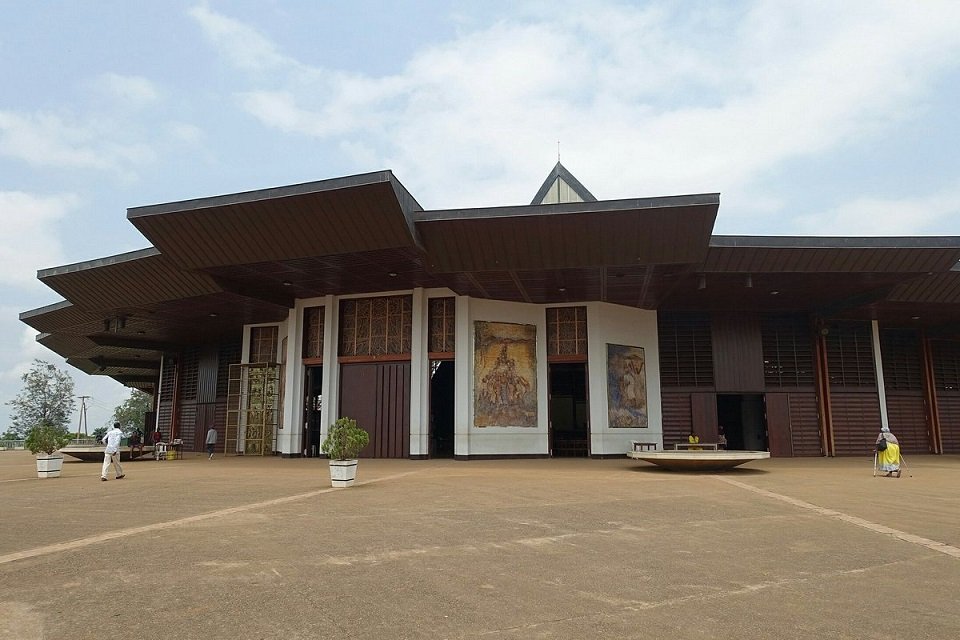
The Basilica of Mary Queen of Apostles stands as one of the most important religious and cultural landmarks in Yaoundé, the capital city of Cameroon. Located on the historic hill of Mvolyé, this impressive basilica welcomes pilgrims, tourists and architecture enthusiasts from around the world. Its serene environment, striking architectural style and deep spiritual significance make it an essential stop for visitors exploring the cultural and religious heritage of Cameroon. The basilica serves as a centre of worship, reflection and community gathering, offering a peaceful retreat within the vibrant city.
History and Background
The origins of the Basilica of Mary Queen of Apostles date back to the early twentieth century when Catholic missionaries established a mission at Mvolyé. As the Christian community grew, the need for a larger and more modern place of worship became evident. Construction of the present basilica began in the early nineteen nineties with the intention of creating a grand sanctuary dedicated to the Virgin Mary under the title Queen of Apostles. After years of careful architectural design and artistic craftsmanship, the building was elevated to the status of a minor basilica, marking its importance in the Catholic Church and its cultural significance in Cameroon.
What Tourists Can Experience
Visitors to the basilica are immediately impressed by its remarkable architecture. The structure rests on twelve massive columns that symbolize the twelve Apostles, giving the building both physical strength and spiritual meaning. The interior features an expansive nave filled with natural light, enhanced by beautifully crafted stained glass windows that depict biblical scenes and the life of the Virgin Mary. These artistic elements create a warm and inspiring atmosphere perfect for meditation, prayer and sightseeing.
A central highlight of the basilica is the large statue of the Virgin Mary, carved from fine Cameroonian wood. The altar, made of high-quality stone, reflects the local artistic traditions and enhances the basilica’s majestic presence. The surrounding grounds provide additional spaces for reflection, including outdoor prayer paths and quiet gardens that allow visitors to appreciate the peaceful environment.
Practical Information for Tourists
The Basilica of Mary Queen of Apostles is easily accessible from major parts of Yaoundé and is located near other cultural and historical attractions, making it an ideal stop during city tours. Guests can visit throughout the week, although the experience is particularly enriching during morning or evening hours when the light enhances the stained glass and architectural features. Modest clothing is recommended, and photography is typically allowed in designated areas, enabling visitors to capture the beauty of this sacred landmark.
Many travellers choose to combine their visit to the basilica with tours of nearby attractions, including the National Museum, the Monument of Reunification and the bustling markets of Yaoundé. The area around Mvolyé also offers scenic viewpoints that showcase the capital’s unique landscape.
Why This Site Belongs in Your Luxecam Tours Itinerary
Including the Basilica of Mary Queen of Apostles in a tour package adds depth, culture and spiritual richness to the travel experience. The site appeals to a wide range of visitors, including pilgrims seeking a meaningful religious journey, architecture lovers interested in sacred design and tourists eager to learn about Cameroon’s cultural identity. Its blend of history, sacred art and peaceful ambience makes it an unforgettable stop for anyone exploring Yaoundé.
For Luxecam Tours Ltd, the basilica provides an excellent highlight for city excursions, heritage tours and cultural discovery trips. It offers a calm and inspiring moment within a lively urban itinerary, allowing guests to appreciate both the spiritual and artistic heritage of Cameroon.
A visit to the Basilica of Mary Queen of Apostles offers visitors a chance to connect with the country’s deep religious traditions, admire an outstanding piece of architecture and enjoy a serene space that embodies peace, devotion and culture. It remains one of Yaoundé’s most remarkable attractions and a must-see destination for travellers exploring the heart of Cameroon.
